The sneaky muscle imbalance behind finger injuries: FDS vs fdp
Finger strength is THE most important thing for climbing performance.
Wow, hot take! Everybody knows that.
But are you paying attention to how you generate that strength? One of the most overlooked aspects of finger training is maintaining a healthy balance between the two muscles that create your finger strength: flexor digitorum superficialis (FDS) and flexor digitorum profundus (FDP). When these muscles work together efficiently, climbers can crimp harder, tolerate more training volume, and reduce their risk of injury. When these muscles become imbalanced, performance and finger health often suffer.
A Quick Anatomy Review
Both the FDS and FDP are located in the forearm and are responsible for flexing the fingers.
The FDS attaches to the middle phalanx of each finger and primarily flexes the proximal interphalangeal (PIP) joint—the middle knuckle. The FDS is heavily involved when climbers use more aggressive crimping positions that place the PIP joint into significant flexion.
The FDP runs deeper in the forearm and continues all the way to the distal phalanx, the fingertip bone. Because of this attachment, the FDP is the primary muscle responsible for flexing the distal interphalangeal (DIP) joint—the joint closest to the fingertip.
While these muscles almost always work together during climbing, different grip positions can bias one muscle more than the other.
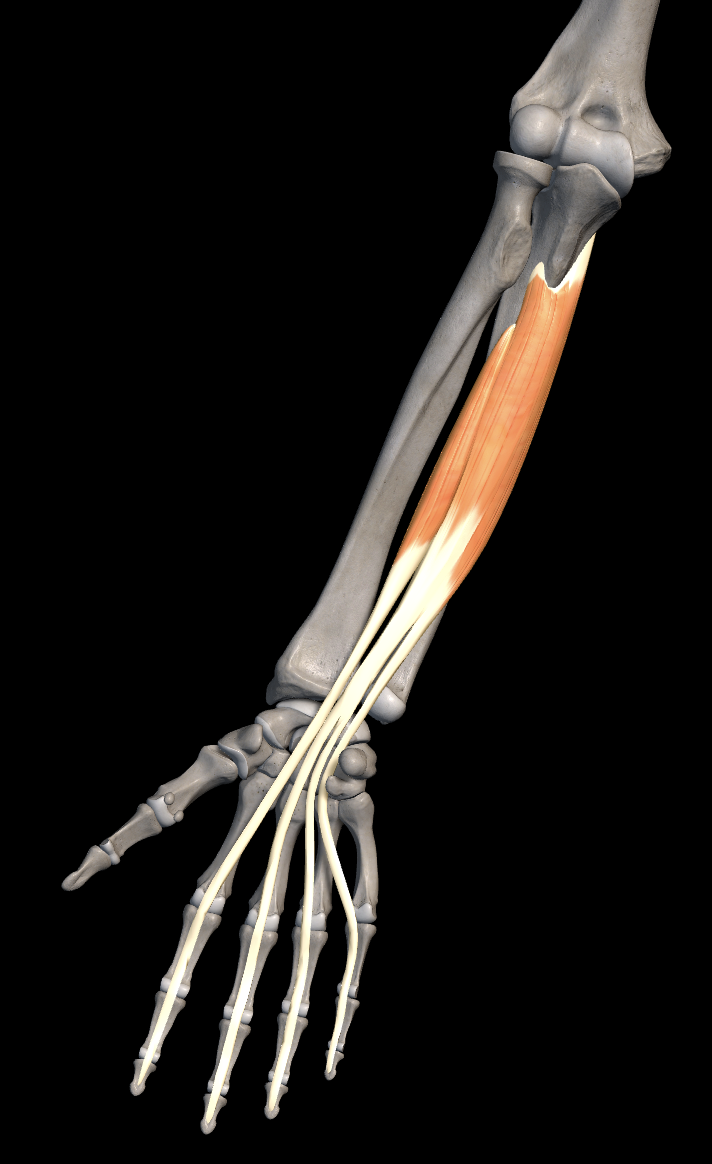
Flexor digitorum profundus: attaches to the tips of the fingers
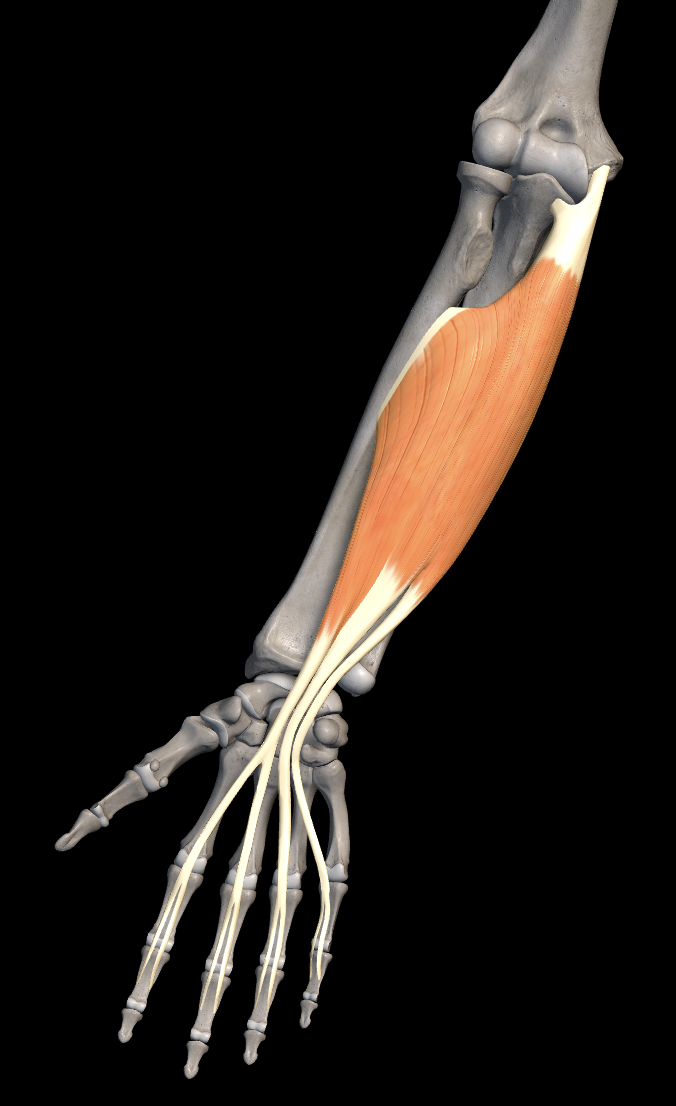
Flexor digitorum superficialis: attaches to the middle segment of the fingers
Understanding Crimp Positions
Before discussing muscle balance, it’s helpful to review common climbing grip positions.
Full crimp
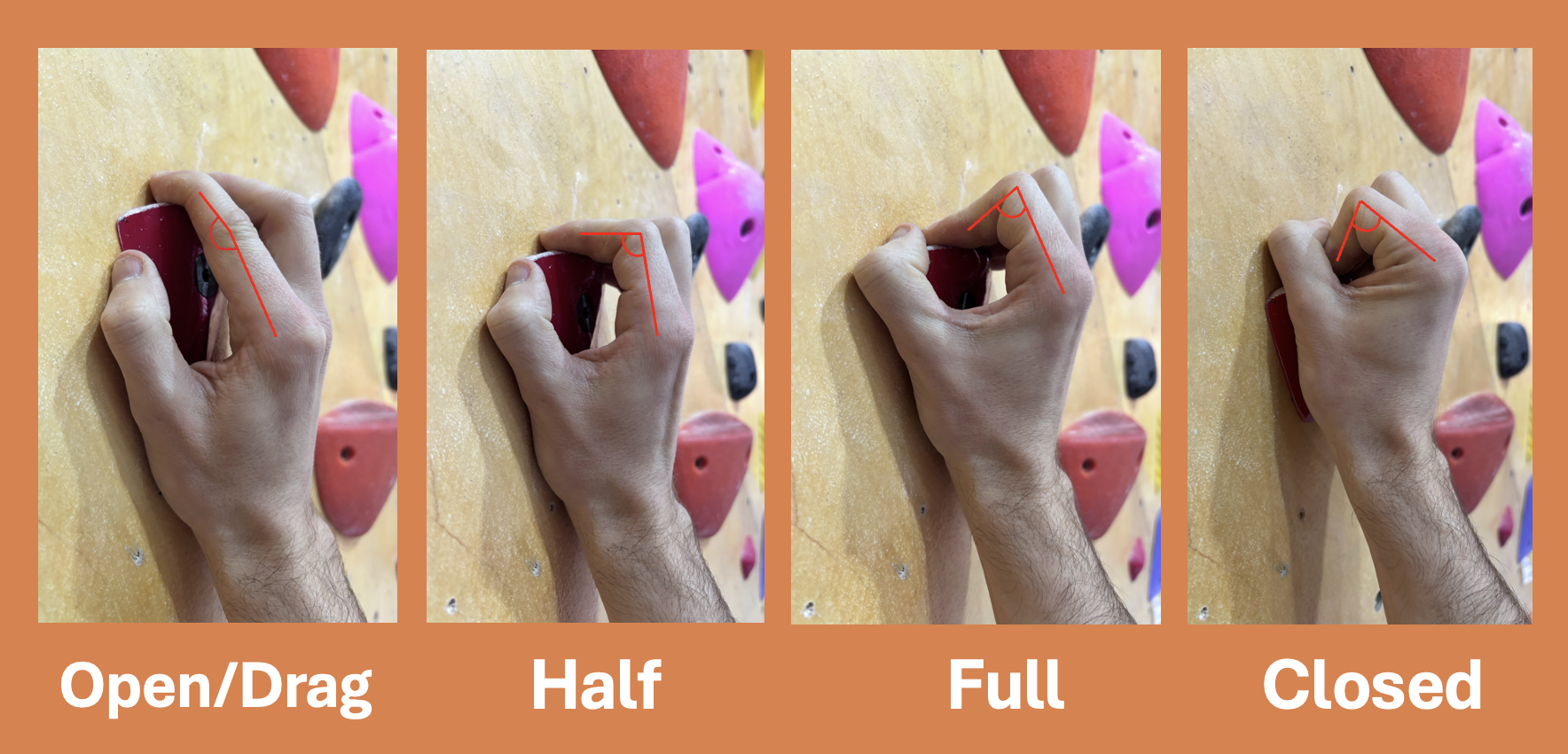
The full crimp involves significant flexion of the PIP joint with the DIP joint extended or hyperextended. The thumb can be wrapped over the index finger (technically called a closed crimp) to create additional force.
This is the strongest grip position for many climbers and is commonly used on credit card edges, thin limestone pockets, and is commonly over-used by climbers who aren’t paying attention to their crimping form. It also places the highest stress on the finger pulleys, tendons, and joints.
Half crimp
The half crimp maintains approximately 90 degrees of flexion at the PIP joint and a neutral or straight position at the DIP joint. This is the most commonly used position for fingerboard training and is widely used on edges and smaller holds.
Open crimp & 3 finger drag
The open crimp position keeps the fingers more extended while the DIP joints remain flexed. 4 fingers = open crimp, 3 fingers = 3 finger drag. These are commonly used on larger crimps, slopers, pinches, pockets, and many modern gym holds.
Compared to the half and full crimp, the open crimp generally shifts more demand toward the FDP because the muscle must actively flex the DIP joints and maintain tension through the fingertips.
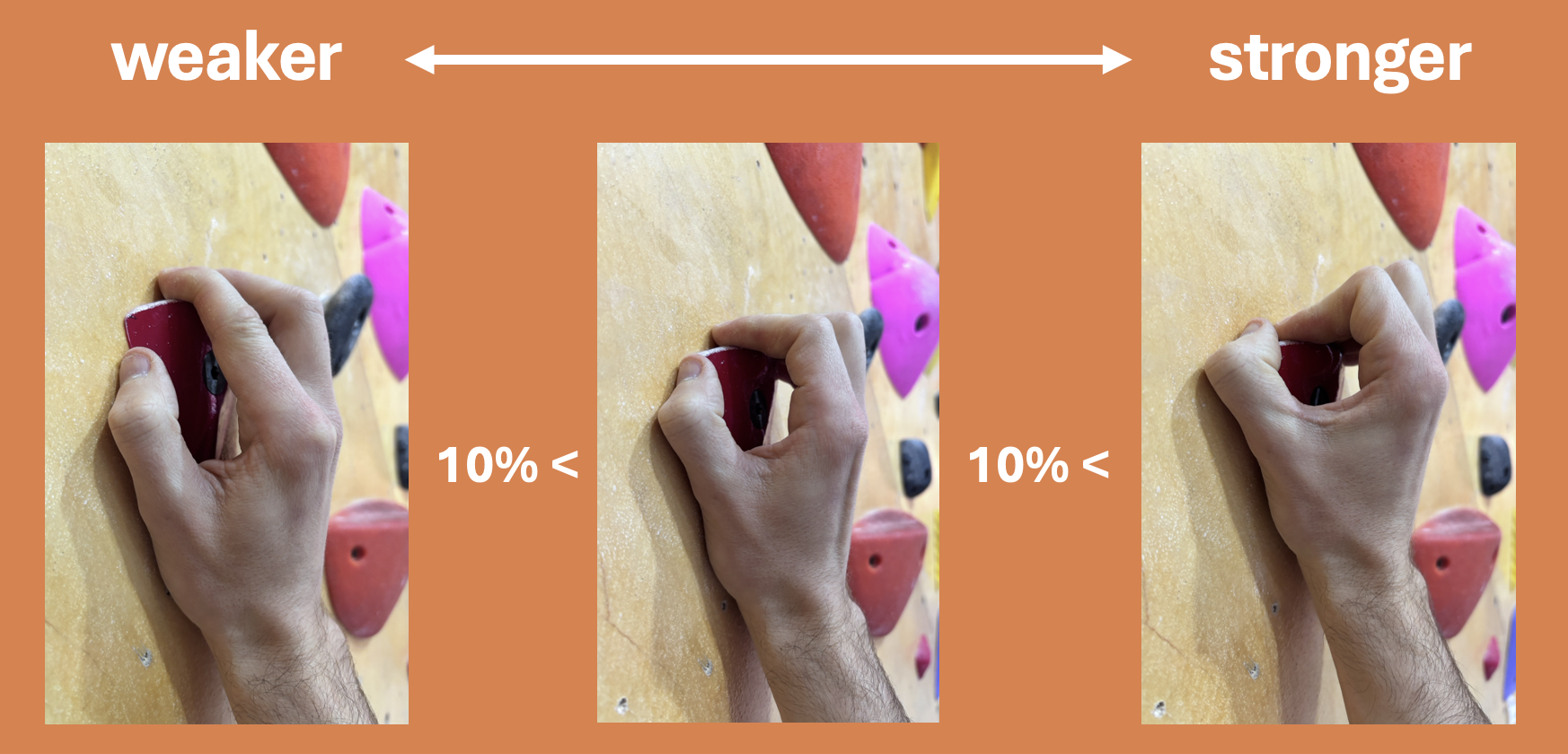
Which Muscle Is Working Harder?
In reality, both muscles contribute during all climbing grips. However, certain positions tend to emphasize one more than the other.
The FDS tends to be more dominant during full crimp and half crimp positions where the PIP joints are heavily flexed. These positions allow climbers to maximize mechanical advantage on small edges and often (unintentionally) become the default grip strategy.
The FDP becomes increasingly important when using open-handed positions, slopers, pockets, and holds that require active engagement through the fingertips. The FDP is responsible for maintaining tension at the DIP joint and transmitting force all the way to the end of the finger.
FDS: half and full crimps
FDP: open crimps and 3 finger drags
Because climbing rewards successful movement rather than ideal muscle coordination, many climbers naturally gravitate toward crimping strategies that over-rely on the FDS.
The Problem With Modern Climbing Habits
Most climbers spend too much time in full crimp and half crimp positions. While a few go the other way because they got scared from an article about how full crimping is toxic and evil and have only been opening crimping ever since. But that’s an article for a different day.
Whether they’re projecting hard sport routes, steep boulders, or training on fingerboards, many athletes default to aggressive crimping because it feels strong and familiar. Unfortunately, this often comes at the expense of developing the FDP.
Over time, the FDP can become relatively weak, undercoordinated, and poorly conditioned compared to the FDS. The climber may still perform well on familiar edge-based terrain, but they often struggle when forced into open-handed positions or when trying to generate force through the fingertips.
This imbalance creates a situation where one muscle system consistently absorbs more stress than it was designed to handle.
How Muscle Imbalances Can Lead to Injury
When the FDS becomes dominant and the FDP fails to contribute appropriately, several common climbing injuries become more likely.
Synovitis
Finger joint synovitis is inflammation of the joint lining and is one of the most common overuse injuries in climbers.
Repeatedly loading the PIP joints in aggressive crimp positions can create excessive compressive forces within the joints. If the FDP lacks the strength and coordination to share the load effectively, the PIP joints often bear the brunt of the stress. Over time, this can contribute to chronic swelling, stiffness, and pain.
Flexor Tendon Strains
The flexor tendons are designed to distribute load across multiple structures. However, when one muscle group consistently dominates, certain tendon regions can become overloaded.
Climbers with poor FDP recruitment will overuse their FDS. We know what happens next.
Pulley Injuries
Pulley injuries are frequently associated with high-force crimping.
While pulley injuries are multifactorial, a climber who relies almost exclusively on full crimp and half crimp positions often exposes the pulley system to repetitive high loads. Developing stronger FDP function and improving open-handed strength can help diversify loading patterns and reduce excessive dependence on aggressive crimping positions.
Weak Crimp Strength (now do I have your attention?)
Not surprisingly, an underdeveloped FDP will make your crimp strength go to shit.
Maximum finger force depends on coordinated contribution from both the FDS and FDP. If one muscle is significantly underperforming, overall force production suffers. Climbers may plateau despite increasing training volume because they are missing a key component of finger strength.
How to test yourself:
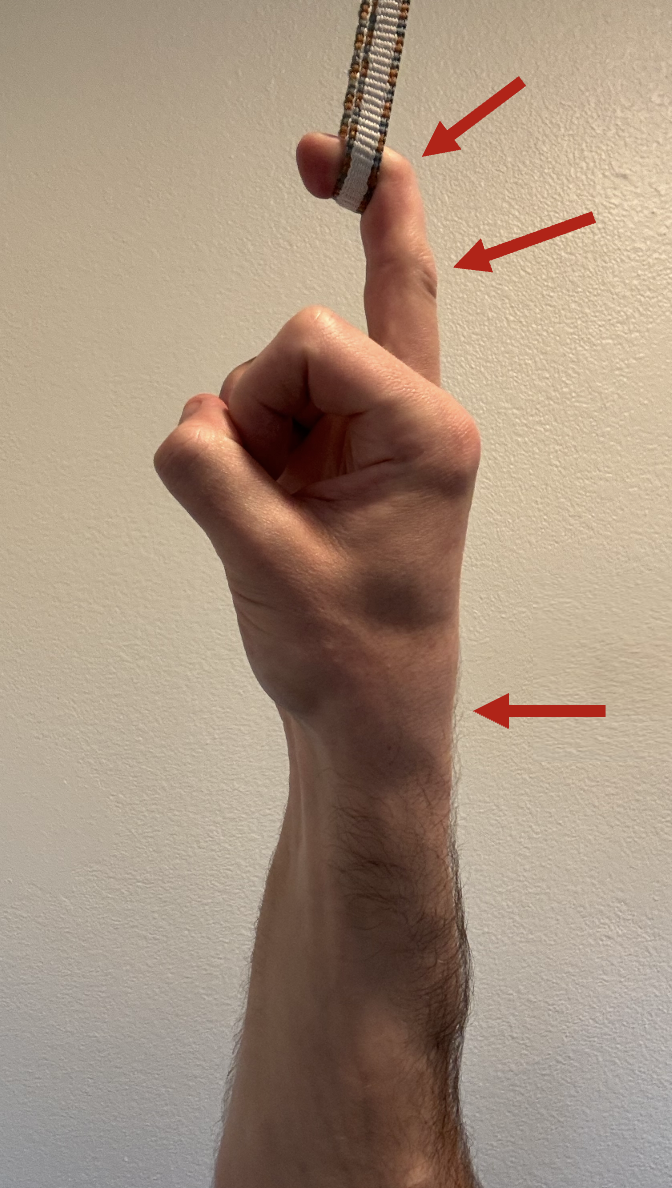
Proper form for FDP testing:
You should be able to maintain this position perfectly while pulling down strongly with your whole arm.
-DIP joint flexed
-PIP joint perfectly straight
-Wrist straight
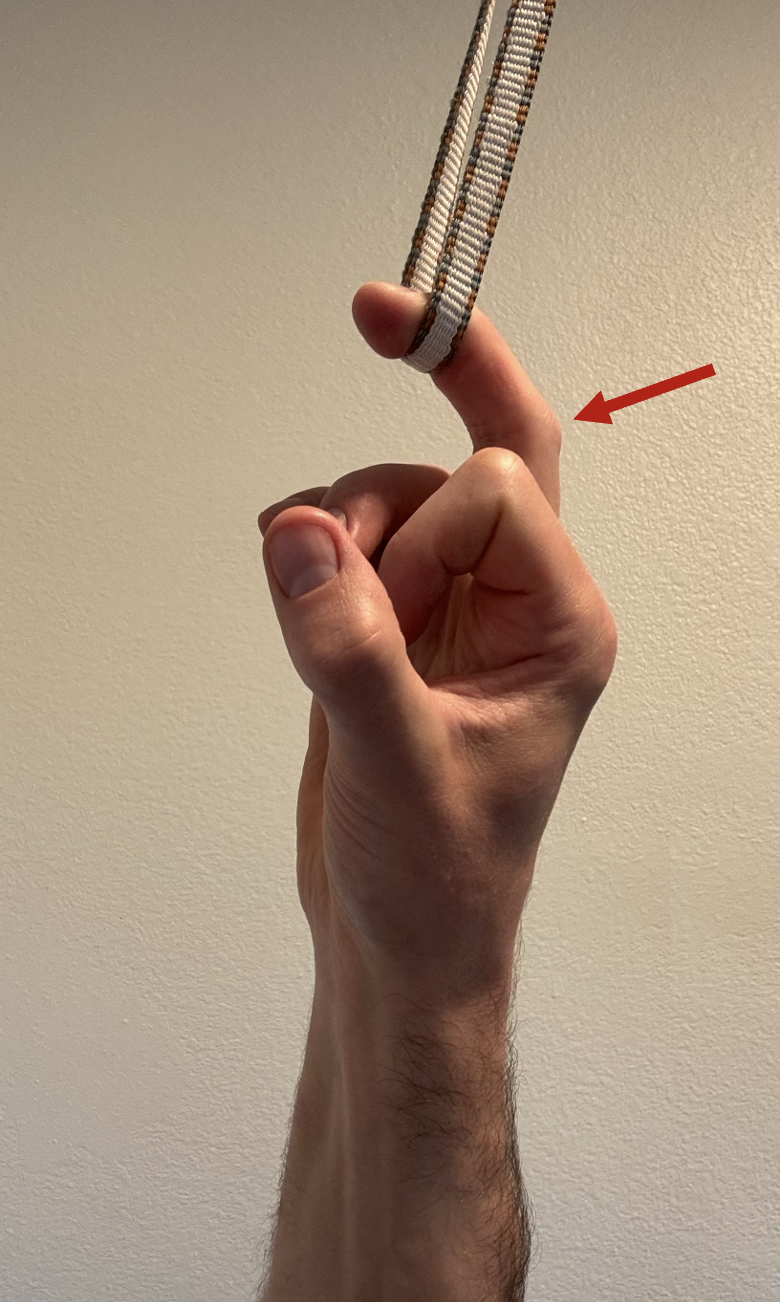
Incorrect form for FDP testing
-PIP joint flexed
-Wrist extended/bent
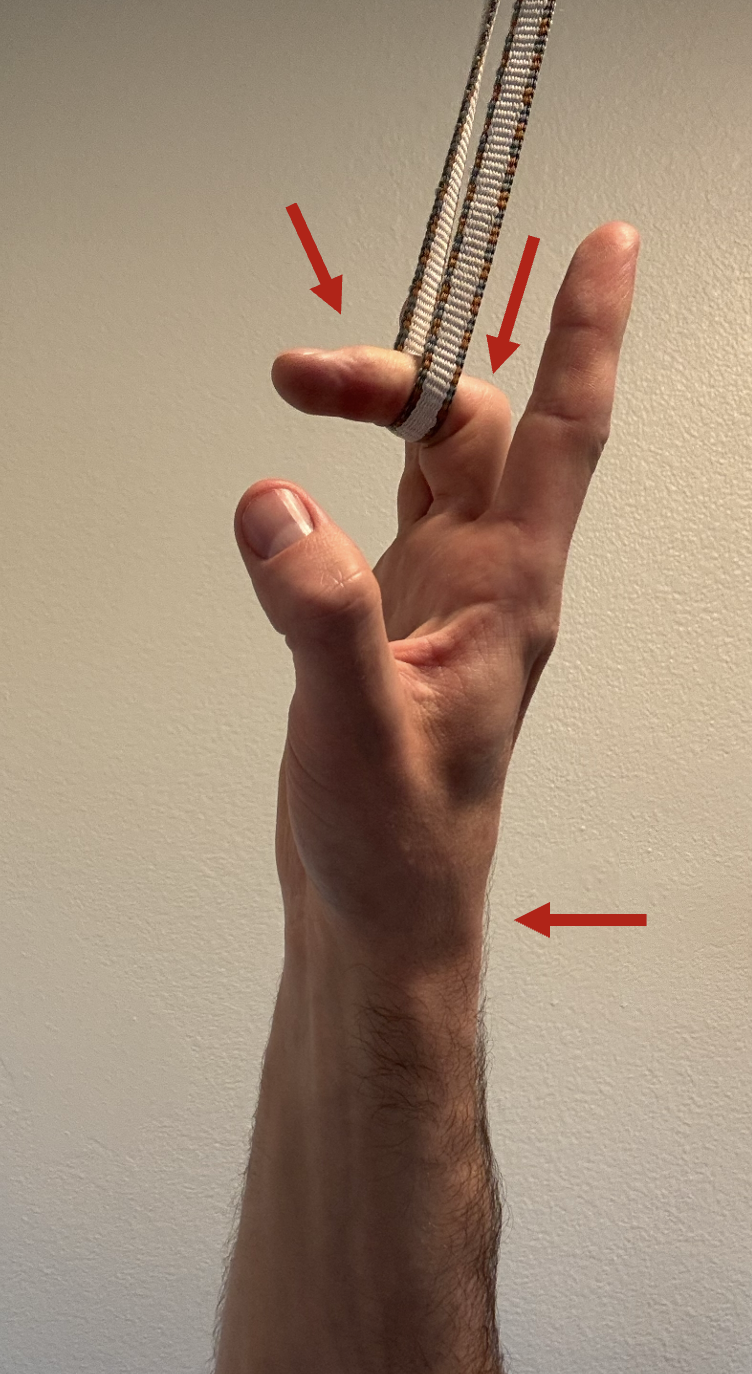
Correct form for FDS testing
You should be able to maintain this position perfectly while pulling down strongly with your whole arm.
-DIP joint straight & relaxed
-PIP joint at 90 degrees
-Wrist straight
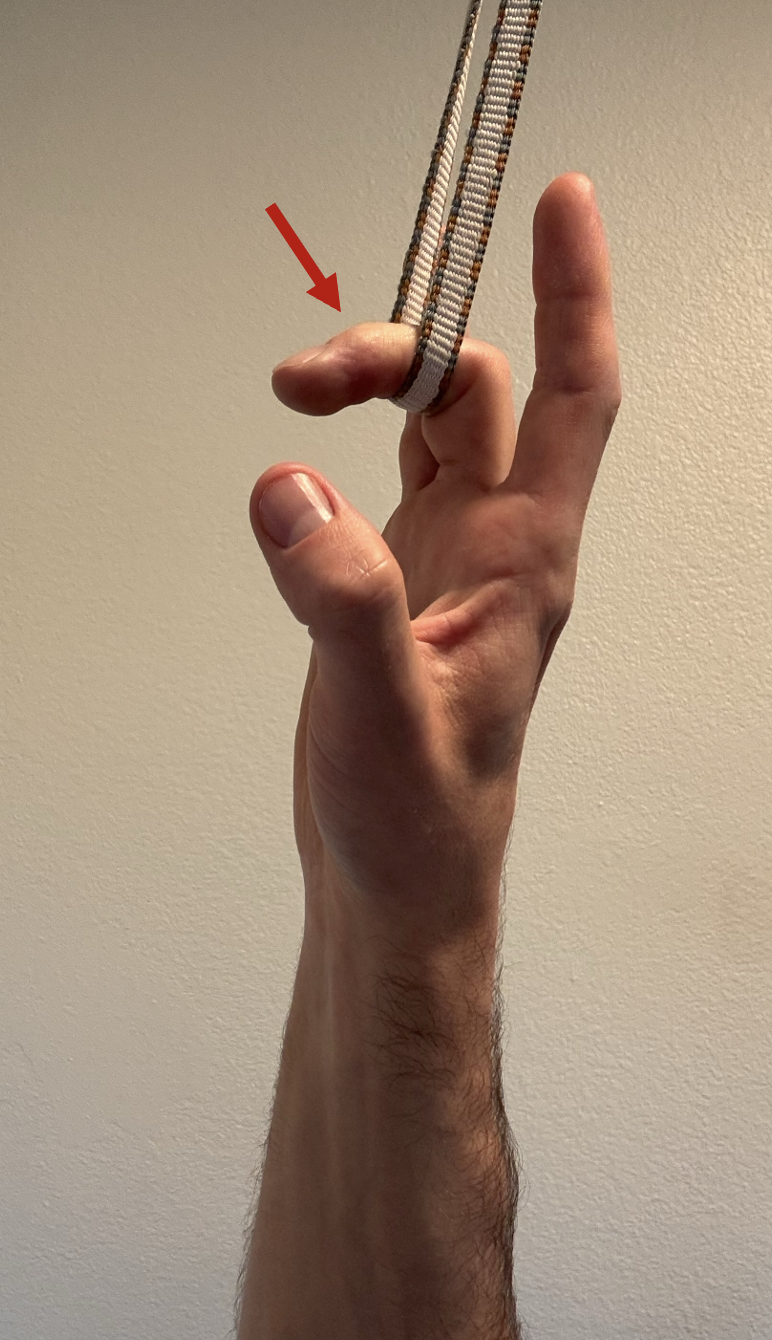
Incorrect form for FDS testing:
-DIP joint flexed
-Wrist extended/bent
Building a More Complete Finger Strength System
The goal is not to eliminate crimping. Crimp strength is essential for climbing performance.
Instead, climbers should strive to develop both the FDS and FDP so that each muscle can contribute appropriately across a wide range of grip positions. A climber with strong open-hand strength often demonstrates better force distribution, greater movement options, and improved injury resilience.
Training both systems creates stronger fingers, healthier joints, and more adaptable climbing performance.
Below are demonstrations of exercises that can help target the FDS and FDP individually. These drills can be useful for identifying weaknesses, improving coordination, and building a more balanced finger strength foundation.
Are your fingers keeping you from getting the most out of your climbing? Schedule an appointment with The Climbing Project where we’ll get to the bottom of what’s holding you back. I’m sure you’ve tried ChatGPT. Since that hasn’t worked, get in touch with us!